EXiTS:Room Escape Game
- 4.4
- Rating
- 1.00M
- Installs
- Free
- Price

 Analysis by App-foxy
I found EXiTS:Room Escape Game most interesting when I stopped treating it like a race and started treating it like a quiet observation exercise. This free adventure game from NAKAYUBI CORPORATION places me in illustrated escape-room situations where the main task is to inspect a scene, connect clues, and work out how to leave. Its premise is simple, but the appeal comes from the small decisions between noticing an object and understanding why it matters.
It is a particularly approachable choice for someone who enjoys puzzle games but does not want combat, complicated controls, or a demanding reflex test. The game is rated for Everyone, runs on Android from version 6.0 onward, and has reached over a million installs. Those details do not guarantee that every player will find it comfortable, but they do place it in the easy-to-try end of the adventure category. I can open it for a short mental break, solve one section, and put it down without needing to remember a large control scheme.
My overall impression is positive, with an important qualification: this is better for players who enjoy looking carefully and trying ideas than for players who want a fast story or constant action. The puzzles can also become less friendly when visual details blend into the artwork or when the intended clue is not the one I first notice. That balance between calm accessibility and occasional visual ambiguity is the key to understanding the experience.
You May Also Like

 Blood Strike: 2.5 Anniversary
Blood Strike’s Loadouts Turn Every Drop Into a Tactical Gamble
A close look at Blood Strike’s custom loadouts: how fast access to signature weapons reshapes its battle royale rhythm, rewards preparation, and narrows the gap between fights.

 Pandora - Music & Podcasts
Pandora’s Music Is Easy to Start, but Harder to Recover
Pandora’s strength is its low-effort path from a seed to a station. Its weak spot is how much confidence it asks you to place in connection, setup, and quiet recovery.

 8 Ball Pool
 Is Built on Rivalries, Rematches, and Routine
A close look at the rivalries, rematches, shared routines, and unanswered safety questions that turn a quick pool match into a persistent mobile community.

 Samsung Music
’s Quiet Strength Is Playing What You Already Own
Its reach comes less from spectacle than from dependable access to a personal library. That simplicity is both the app’s strongest retention engine and its ceiling.

 AccuWeather: Weather Radar
AccuWeather Review: A Quick, Clear Forecast for Everyday Decisions
For everyday plans, the best forecast is the one you can understand quickly. AccuWeather makes rain timing, radar, and local conditions easy to act on, with a few trade-offs.

 Hill Climb Racing
Why Hill Climb Racing Still Turns Crashes Into One More Run
A tiny car, a bumpy hill and one more upgrade: Hill Climb Racing keeps resurfacing because its simple chaos makes every near-miss feel personal.
More From Our News Desk
View All News


How clearly the rooms communicate what matters
The first strength is the basic readability of the room format. I can explore a compact scene, inspect what appears useful, and gradually build a mental list of locks, symbols, containers, and suspicious details. Compared with a large adventure game full of menus and character systems, the interface feels focused. I am usually thinking about the current room rather than managing equipment, quests, or a long inventory.
That simplicity helps navigation. A player who is new to escape-room games can understand the general rhythm quickly: look around, tap likely points of interest, interpret what appears, then return to the wider scene with a new idea. I appreciate that this structure makes progress feel tangible. Even when I am stuck, I normally know that the answer is somewhere in the room rather than buried in a distant storyline.
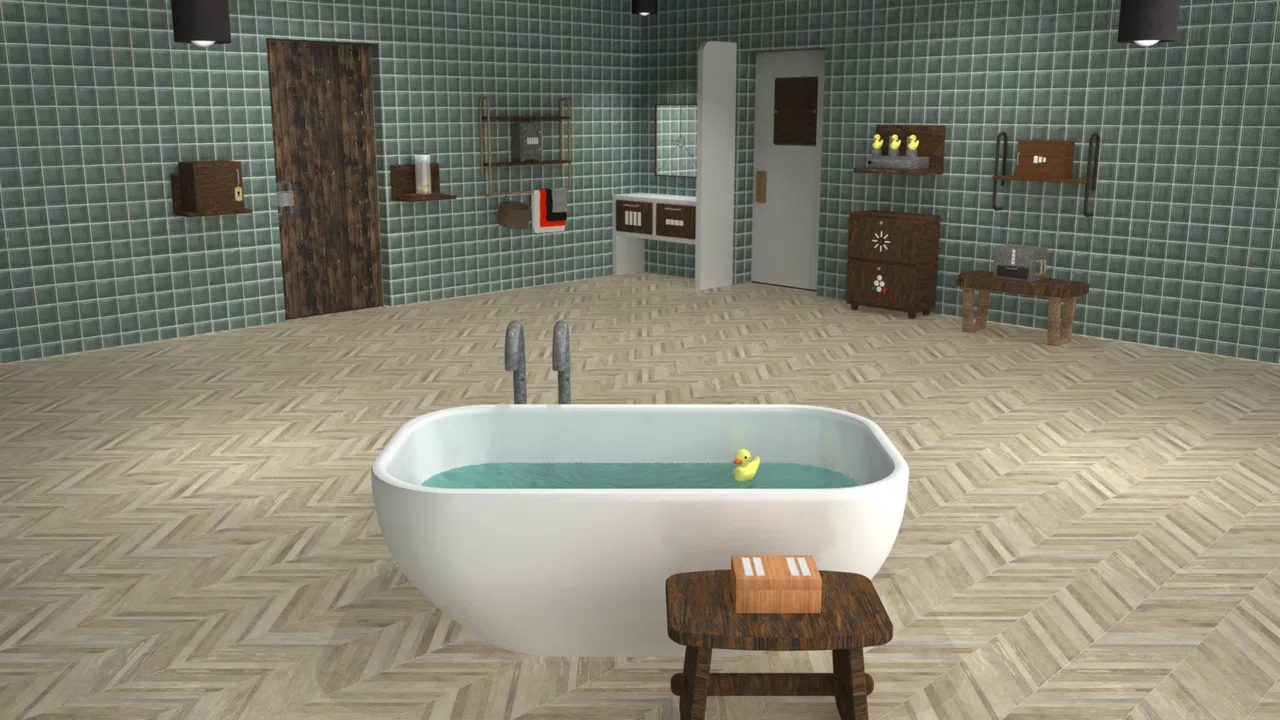
The visual presentation is part of the attraction. The rooms are designed to make ordinary objects feel worth examining, and the illustrated setting gives the puzzles a gentler personality than many darker escape games. At the same time, attractive artwork can create a readability trade-off. A decorative mark may look like background texture, while a meaningful clue may not immediately announce itself as interactive. I found that the best approach was to scan the whole scene first, then revisit it with a more deliberate eye.
For that reason, I would not recommend tapping randomly as a main strategy. A better workflow is to divide the room into areas, inspect each one once, and remember what changed after every successful interaction. This reduces repeated tapping and makes the logic easier to follow. It is also useful for players who become overwhelmed when several objects compete for attention.
The game’s average rating is 4.4 from around sixty-five thousand ratings, with roughly six thousand six hundred written reviews. I see that as a useful sign of broad appeal, though not proof that every puzzle will suit every player. Escape-room design is personal: one person’s satisfying leap can feel like an arbitrary guess to another. In my experience, the game works best when I accept that a room may require a pause rather than immediate progress.
Reading clues without rushing
One of the less obvious skills here is separating observation from interpretation. When I see a row of objects, colors, or shapes, my first impulse is often to search for a code. That can be a mistake. Sometimes the more useful question is what has changed, what can be opened, or which object has a relationship with another part of the room. I get better results when I record the visible facts mentally before deciding what they mean.
This is also where the game can support different thinking styles. A visual thinker may spot a pattern quickly, while someone who prefers a step-by-step method may benefit from grouping clues by location and purpose. I would keep a small note nearby for combinations or observations if I were playing a longer session. That is not necessary for every room, but it prevents the common problem of rediscovering the same clue several times.
There is a trade-off between clean presentation and explicit guidance. If every interactive object were highlighted strongly, the game would be easier to navigate but less satisfying to inspect. EXiTS generally asks me to participate in the search. Players with reduced visual acuity, attention difficulties, or a preference for unmistakable interface cues may therefore need more patience than the calm presentation initially suggests.
Motor, sensory, and situational comfort
From a motor perspective, the game is naturally less demanding than action adventures. I do not need rapid swipes, precise timing, or continuous movement. Most of the work is selecting parts of the room and considering the result. That makes it suitable for relaxed play and for people who prefer to avoid games built around speed or repeated complex gestures.
Still, low physical demand is not the same as universal ease. Repeatedly examining a busy scene can require accurate tapping, especially when an object is small or close to other visual elements. A player with limited fine-motor control may find that the challenge shifts from solving the puzzle to selecting the intended area. I would play with the phone held steadily and use a larger screen when available, because a little extra room can make inspection less tiring.
The sensory experience is comparatively gentle. There is no need for loud, fast action to understand what is happening, and the game’s central appeal comes from visual investigation. That may suit players who want a quieter alternative to combat-heavy adventures. It also makes the game practical in places where I would not want to play something noisy or attention-grabbing.
Visual dependence remains the main consideration. The clues are presented through the room artwork and the objects within it, so anyone who cannot comfortably distinguish small details, subtle contrasts, or visual patterns may face a substantial barrier. I would not describe the game as broadly accessible simply because its controls are simple. Its core puzzle language is visual, and that matters more than the number of buttons involved.
For players sensitive to clutter, the best habit is to approach each room in passes. First identify the large structures, then inspect containers and mechanisms, and only afterward look for tiny decorative details. This prevents the entire screen from becoming one undifferentiated problem. It also gives the experience a more predictable pace, which can help when too many possible clues feel mentally noisy.
Why the phone context changes the experience
EXiTS fits short sessions well. I can play while waiting for an appointment, during a quiet commute when it is safe to do so, or at home when I want a puzzle without committing to a long campaign. The room-based structure gives me natural stopping points, although I still prefer to finish an active chain of reasoning before closing the game. Leaving halfway through can make the next session feel harder if I forget which objects I already tested.
That same flexibility has limits. This is not a good choice when I am distracted, moving through a crowded place, or sharing attention with a conversation. A clue that seems obvious in a calm setting can become frustrating when I am interrupted repeatedly. The game rewards concentration more than it rewards spare minutes alone, so “short session” should not be confused with “mindless session.”
It can work well as a shared activity too, particularly with one person controlling the phone and another person scanning the scene or proposing connections. That arrangement may help someone who finds tapping difficult but enjoys deduction. It also changes the game’s social character: instead of silently searching, we can explain why a symbol might relate to a lock and test the idea together.
On the other hand, players looking for a multiplayer adventure, a competitive score chase, or a large character-driven journey should choose something else. The strength here is focused puzzle solving. It is not trying to replace a story-heavy role-playing game or an action title, and I think it is better judged on whether its rooms make observation enjoyable.
Where the friction becomes noticeable
The main limitation is the familiar escape-game problem of uncertainty. When I am stuck, I may know that I have missed something without knowing whether the issue is observation, sequence, or interpretation. That can produce a satisfying breakthrough, but it can also feel like trial and error. I recommend revisiting the room systematically before assuming the solution requires a clever leap.
Another friction point is the difference between a clue being present and a clue being legible. A small visual element may be technically visible but still easy to overlook on a phone. This matters especially for players with visual limitations or anyone using a smaller display. Increasing the device’s general text size may not solve artwork-based puzzles, so I would not rely on system scaling as a complete answer.
The free entry point is welcome, but the game includes in-app purchases ranging from $1.49 to $23.99 per item. I would approach those purchases carefully and decide in advance whether I am comfortable paying for optional help or other extras if I reach a difficult point. The important practical distinction is that a free download does not necessarily mean every part of the experience will remain entirely cost-free.
The current version is 22.5, which suggests the game has continued to receive attention since its release on April 25, 2019. I would still keep expectations realistic about updates: a newer version number does not automatically mean that every accessibility concern has been addressed. For me, the relevant question is whether the visual puzzle format itself suits my needs, not simply whether the app is maintained.
There is also a psychological barrier for players who dislike being stuck. The game asks me to tolerate uncertainty and resist immediately searching for an answer elsewhere. If I want constant reassurance that I am making progress, a guided puzzle game with clearer objectives may be a better match. If I enjoy the moment when several observations suddenly connect, the same uncertainty becomes part of the appeal.
Who will enjoy it, and who should pass
I would recommend it to people who like point-and-click investigation, compact logic challenges, and quiet exploration. It is especially suitable for someone who wants an adventure game without combat or demanding movement. It can also be a good introduction to escape-room puzzles because the basic interaction loop is easy to understand, while the real challenge comes from noticing relationships between objects.
I would be more cautious for players who need strong visual separation, large interaction targets, or non-visual alternatives. The game’s central activity is examining illustrated rooms, so those needs affect the heart of the experience rather than a secondary menu. Someone with motor limitations may find the lack of rapid controls helpful, but still struggle if precise selection is difficult. Someone with sensory sensitivities may appreciate the calmer pace, while someone who finds visual searching tiring may not.
Compared with a traditional physical escape room, this is cheaper to try, more private, and easier to pause. It does not provide the same tactile teamwork or full-room presence. Compared with a word puzzle, it asks more from visual attention and spatial inspection. Compared with an action adventure, it is far less demanding physically but also offers less immediate excitement. Those differences make the choice fairly clear: I would pick this for focused deduction, not for adrenaline or social competition.
My practical advice is to play on the largest comfortable screen, keep the device still, and use a structured search pattern. If a puzzle feels impossible, list the objects you have actually inspected rather than the ones you merely noticed. Then ask whether a clue indicates an order, a transformation, or a connection. That small distinction has helped me avoid forcing every pattern into a numeric code.
For a friend asking whether to install it, my answer would be yes if they enjoy patient visual puzzles and want a free adventure to sample at their own pace. I would explain the visual dependence and the possibility of purchases before they begin, especially if they need highly legible interfaces or dislike ambiguous clues. The game is welcoming in its controls and atmosphere, but not automatically accessible in every sensory or cognitive sense.
In the end, EXiTS:Room Escape Game succeeds because it keeps the action centered on noticing. Its rooms give me a reason to slow down, test an idea, and enjoy a solution that I reached myself. The experience is not frictionless: visual detail can be demanding, and being stuck can expose the limits of a lightly guided format. Even so, for players whose abilities and circumstances fit its visual investigation style, it is a thoughtful, low-pressure adventure that earns its place among mobile escape games.
My inclusive verdict: this is a strong choice for calm, touch-based puzzle solving, particularly when I want flexible sessions and minimal motor demands. I would not present it as a universal option, because the artwork carries so much of the gameplay and some clues may be difficult to distinguish. But if you can comfortably inspect a phone screen and enjoy working through uncertainty, NAKAYUBI CORPORATION’s game offers an inviting way to turn a few quiet minutes into a genuine deduction challenge.
FAQs for EXiTS:Room Escape Game
01What is EXiTS: Room Escape Game about?
EXiTS: Room Escape Game is an immersive puzzle-based adventure where players solve a series of challenging escape room scenarios. Each level presents unique puzzles that require critical thinking and keen observation to unlock doors and escape. The game is designed to test your problem-solving skills in a virtual escape room setting.
02Is EXiTS: Room Escape Game suitable for all ages?
EXiTS: Room Escape Game is generally suitable for teens and adults due to its complex puzzles and themes. While it does not contain explicit content, younger players may find the challenges difficult. It's a great choice for players who enjoy brainteasers and logic puzzles, making it ideal for family play with older children.
03Does EXiTS: Room Escape Game require an internet connection?
No, EXiTS: Room Escape Game can be played offline, allowing users to enjoy the game without needing a constant internet connection. This makes it a convenient option for those who want to play on the go or in areas with limited connectivity. However, updates and additional content may require internet access.
04How challenging are the puzzles in EXiTS: Room Escape Game?
The puzzles in EXiTS: Room Escape Game range from moderately challenging to quite difficult, catering to a broad spectrum of players. Each level offers a unique set of puzzles, requiring players to think outside the box. Hints are available for those who find themselves stuck, ensuring the game remains enjoyable and accessible.
05Are there in-app purchases in EXiTS: Room Escape Game?
Yes, EXiTS: Room Escape Game offers in-app purchases. Players can buy hints to assist with difficult puzzles or unlock additional content. While the base game is free to play, these purchases enhance the gaming experience and provide additional help for those seeking it. Always manage in-app purchases carefully to avoid unexpected charges.
Pros
- Engaging puzzles with unique themes.
- High-quality graphics enhance gameplay.
- Regular updates with new rooms.
- Intuitive controls easy to master.
- Offline play available for convenience.
Cons
- Some puzzles can be overly complex.
- Limited hints may frustrate beginners.
- Occasional bugs in certain levels.
- In-app purchases can be costly.
- Ads can interrupt the experience.

EXiTS:Room Escape Game
Gallery